

Why O2C Cycling
Anatomical Cycling Shoes Built Around Your Foot
Built around the foot. Not tradition.
Most cycling shoes start with a shape that looks right. Ours start with how your foot actually works under load. That one decision changes everything that follows: power, comfort, control.
For decades, cycling shoes have been built the same way: a narrow, symmetrical last, a stiff sole, and an expectation that the rider adapts. Hot spots, numb toes and heel lift became part of the sport.
We think that's backwards. Your shoe is the one contact point that carries every watt you produce. So we build it around you.
Five reasons riders choose O2C Cycling
A true anatomical last
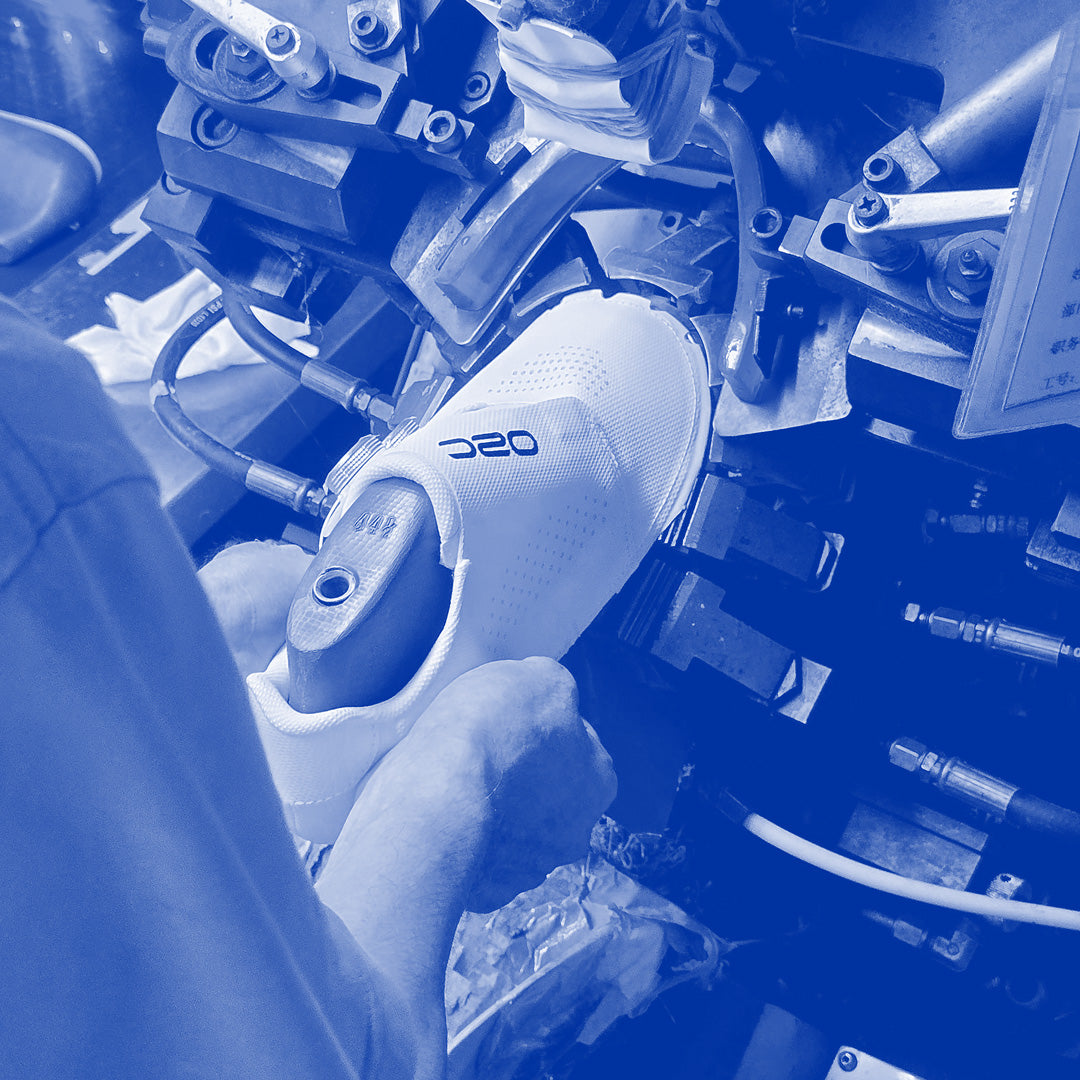
Every O2C Cycling shoe is built on a last shaped by natural foot biomechanics, not fashion. The heel cup cradles the heel, the arch is supported on two planes, and the toe box follows the natural line of your metatarsals so your toes can splay. The result is balanced pressure and a secure fit without compression.

Proven at the highest level
Our founder, Steven Nemeth, first started developing anatomically correct cycling shoes more than eighteen years ago. Shoes he designed have been worn to Olympic track cycling medals across the last five Games, and to wins at the Tour de France, Giro d'Italia, La Vuelta, Paris–Roubaix and UCI World Championships. O2C Cycling is the next evolution of that work.
Standard and wide, in every model
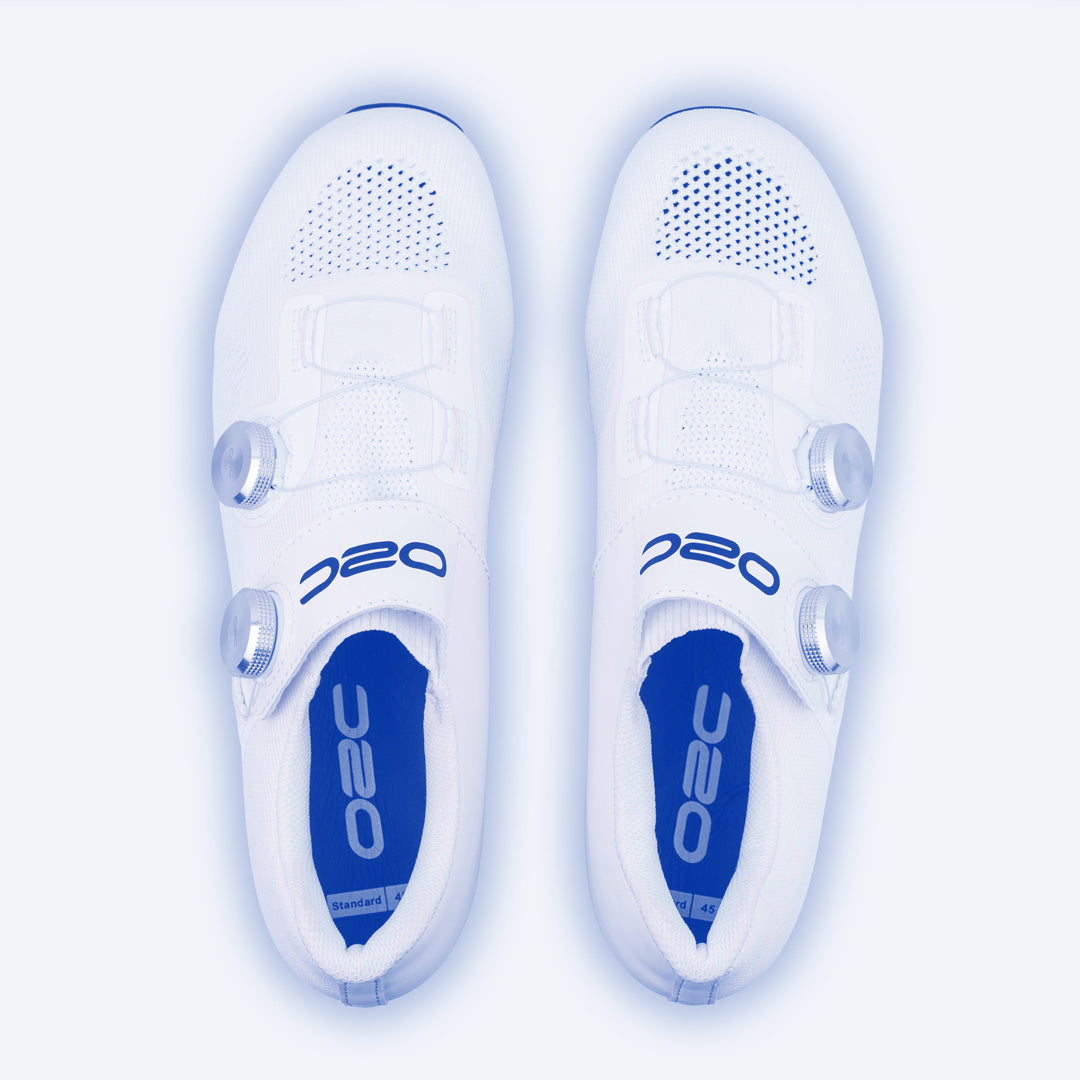
No two feet are the same, so every O2C Cycling shoe comes in standard and wide fits. Wide means wide by design, built on its own last, not just an increased upper. Each size has a specific carbon fibre sole to ensure the fit is perfect.

Structure with purpose
Stiffness alone doesn't make a fast shoe. Our ARC carbon platform uses precision-layered Toray carbon, oriented to where load actually travels. A low stack height puts your foot closer to the pedal spindle, and targeted midfoot support stops the foot collapsing under effort. Nothing flexes that shouldn't, and nothing is rigid that needs to move.
One philosophy, multiple disciplines
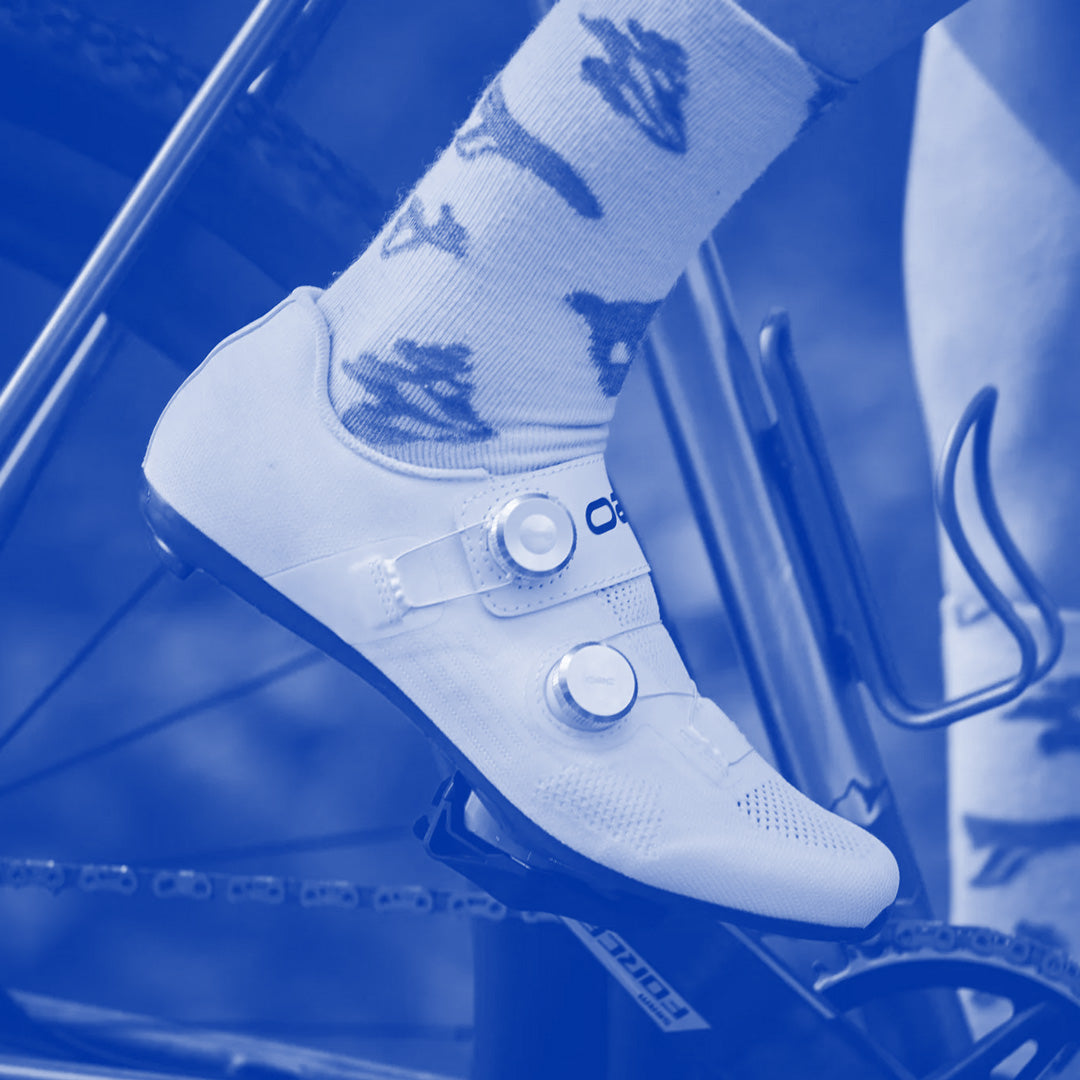
Road, gravel and triathlon shoes all start from the same biomechanical foundation, then get tuned for how that discipline is ridden. Move from your race shoe to your gravel shoe and the fit feels familiar from the first pedal stroke.
O2C Cycling vs Traditional cycling shoes
The O2C Cycling difference
Anatomical, shaped by foot biomechanics
vs
Symmetrical, shaped for looks
Standard and wide, every model
vs
One shape, sometimes stretched
Follows the metatarsal line for natural splay
vs
Tapered
Anatomical cup that locks the heel
vs
Generic cup, prone to lift
Up to 15mm fore-aft adjustment
vs
12mm industry standard
Engineered in eight details
Heel cup
Locks the heel and cuts rearfoot movement.
Anatomical last
Balanced pressure, no compression.
ARC carbon platform
Toray carbon for stiffness, durability and efficiency.
Midfoot stability
Controls pronation and rotation under load.
Dual arch support
Medial and transverse, for neutral alignment.
Toe box shaping
Room to splay, designed to eliminate metatarsal compression.
Low stack height
Closer to the spindle, more direct power.
Extended cleat range
Up to 15mm of fore-aft travel for precise set-up.
"I've spent nearly two decades obsessing over how the foot actually works under load. O2C is the distillation of that work: uncompromising, anatomical, and relentlessly performance-driven."
Steven Nemeth, O2C Cycling Founder
As featured in


Questions riders ask
The shoe is shaped like a foot under load, not like a traditional shoe. Heel, arch, midfoot and toe box are each designed to hold your foot in natural alignment while you pedal.
If your current shoes feel tight across the forefoot, or you size up to get width, start with wide. Our size guide walks you through it.
The brand is new; the design isn't. O2C is led by the designer behind nearly two decades of anatomical cycling shoes worn at Olympic Games and Grand Tours.
Most riders won't. Medial and transverse arch support is built into the shoe.